There are many different types of tombs in Irish cemeteries. The following pages show the types that appear in Irish cemeteries. These include mausolea, altar tombs, table top tombs, chest tombs, pyramids, vaults, and even the odd cairn.

The mausoleum stands as one of the most imposing tomb types found across Irish cemeteries. These freestanding, building-like structures were often erected by wealthy families or prominent public figures as a permanent statement of status and remembrance. Built from stone and designed to house multiple generations, mausolea range from modest, chapel-like forms to grand, architecturally ambitious monuments. Their solid construction and enclosed interiors set them apart from open-air graves, offering a protected space for reflection. Many feature decorative elements such as carved inscriptions, religious iconography, and ornamental ironwork that reflect the artistic sensibilities of their era, making them both funerary landmarks and objects of cultural heritage.

The altar tomb is a distinctive form that draws visual inspiration from religious altars, typically appearing as a solid, rectangular stone block raised on a base. These tombs were especially popular during the eighteenth and nineteenth centuries, often placed in prominent positions within churchyards and older burial grounds. The flat upper surface sometimes bears a carved inscription or heraldic emblem, while the sides may feature decorative panels, pilasters, or symbolic motifs. Despite their seemingly simple form, altar tombs required skilled stonemasonry and careful craftsmanship. Their enduring presence in Irish cemeteries speaks to a tradition of commemorating the dead with dignity and permanence, linking the sacred space of the church with the resting place of the faithful.

Table top tombs, also known as ledger tombs, consist of a large, flat stone slab supported by short legs or a solid masonry base, resembling a table in form. This design elevated the inscribed surface above ground level, protecting the epitaph from dampness and vegetation while creating a clear, readable memorial. The raised platform also served a practical purpose in crowded churchyards, marking a burial site without taking up excessive ground space. Many table top tombs bear deeply carved lettering, family crests, and decorative borders that have weathered centuries of Irish rain and wind. Their distinctive silhouette remains a familiar sight in older graveyards, offering a tangible link to the commemorative practices of past generations.

Chest tombs share similarities with table top tombs but are fully enclosed, resembling a stone chest or box set upon a base. The sides of these tombs often feature elaborate carved panels depicting scenes, symbols, or text that honour the deceased. During the eighteenth and nineteenth centuries, chest tombs became a common choice for families wishing to display their social standing through funerary art. The enclosed design provided a stable, durable structure that could withstand the elements while offering ample surface area for artistic expression. Some examples include carved skulls, hourglasses, or winged figures representing mortality and the passage of time. These tombs remain among the most visually rich monuments in Irish burial grounds, rewarding careful observation with layers of historical and artistic meaning.

Tomb Types

Irish cemeteries contain a remarkable variety of tomb forms, each reflecting different periods, social standing, and funerary traditions. From grand mausolea to humble cairns, these structures form an essential part of Ireland's architectural and cultural heritage.

Carved stone panel with fan and sunburst relief and fluted column details set against a rough rock wall, muted gray tones

Mausolea

Freestanding above-ground burial chambers, often built in classical or Gothic styles. Some of the finest examples can be found in Glasnevin and Mount Jerome cemeteries in Dublin.
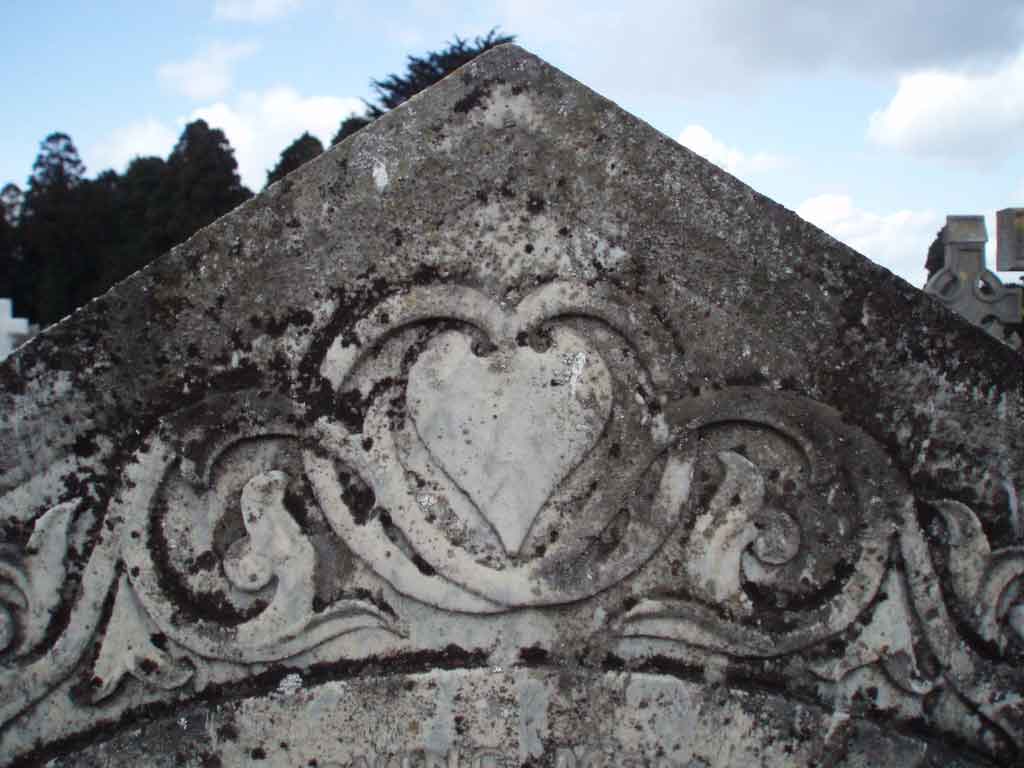
Close-up of a weathered gravestone corner with carved heart and scroll motif, gray and white stone tones, cloudy sky background

Altar Tombs

Raised rectangular stone tombs resembling an altar, typically found in older churchyards. These solid structures often bear inscriptions on the top slab or sides.

Close-up of weathered reddish-brown stone architectural carving with scrollwork and floral relief, pale sky in background

Table Top Tombs

Characterised by a flat horizontal stone slab supported on low legs or pillars, giving the appearance of a table. Common in many historic Irish burial grounds.

Circular stone carving of a bird in flight amid leafy branches, set within an arched headstone bordered by carved clover

Chest Tombs

Solid rectangular stone boxes with panelled sides, often ornately carved. These substantial monuments are widespread across Irish cemeteries from the 17th century onward.
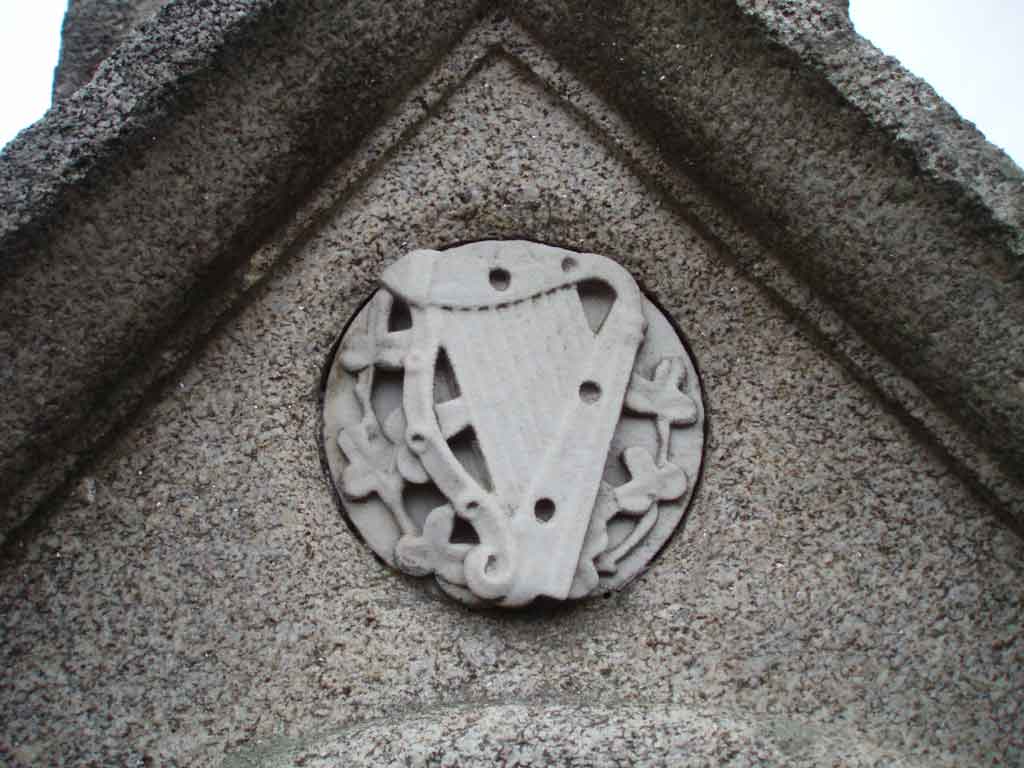
Close-up carved stone medallion depicting a harp surrounded by small clover motifs, set into a triangular pediment; grey stone

Pyramids

Distinctive pyramid-shaped tombs, rare but striking when they appear. These Egyptian-inspired monuments reflect the 19th-century fascination with ancient funerary architecture.
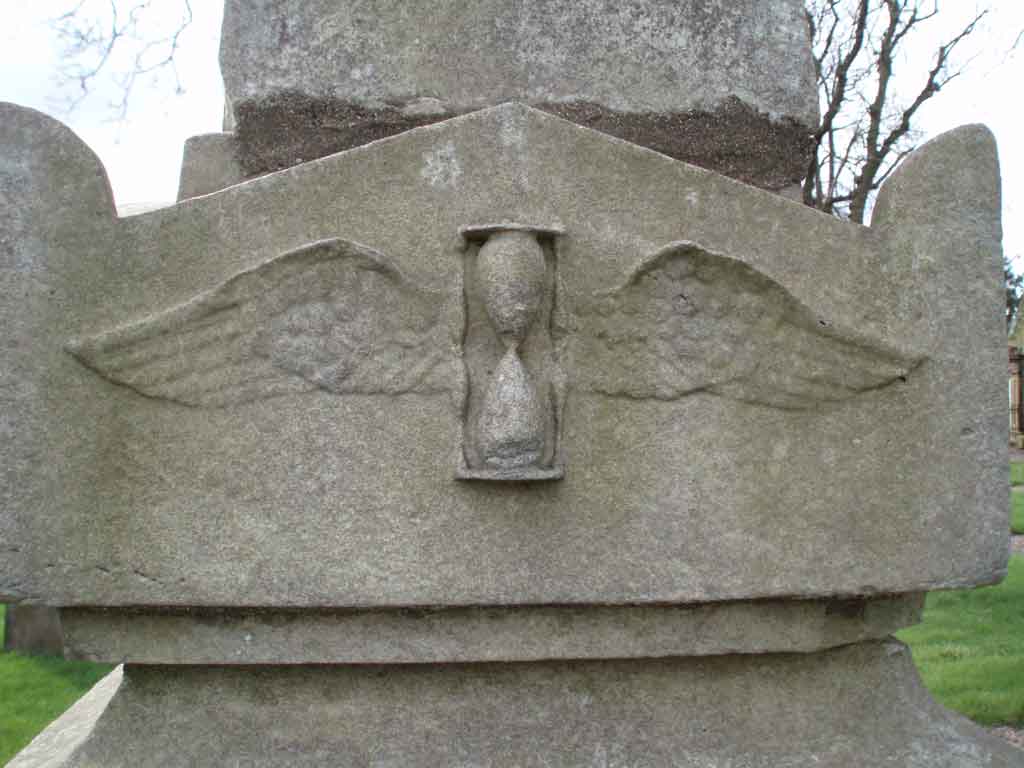
Carved stone monument detail showing winged hourglass motif, gray stone, bare tree and grass in background, somber mood

Vaults

Underground or partially subterranean burial chambers, often marked by a stone entrance or slab at ground level. Many historic vaults lie beneath older churchyards.

Carved stone panel with fan and sunburst relief and fluted column details set against a rough rock wall, muted gray tones

Cairns

Ancient mounds of stones piled over a burial site, dating back to prehistoric Ireland. These are among the oldest tomb types found on the island, often situated in upland landscapes.

Further Reading

Explore related sections of the site for more on funerary art and cemetery heritage:

  • Sculpture — the finest funerary art and architecture in Irish cemeteries
  • Symbolism — symbols used on gravestones throughout Ireland
  • Cemeteries — photographs and information on burial grounds across Ireland